I don’t usually record my paintings because having to work around the camera is awkward and editing footage is tedious, but for the last couple of small paintings, I fortified my mental faculties and set up to document the process. Since I don’t have the best recording equipment, capturing the glorious battle between bold brushstrokes and performance anxiety had to be done at the very edge [of my desk].
As I was editing the video clips, I thought of how much of the painting is unseen as layers are added with each touch of the brush. There is always that ugly stage to fight through, where I have half the mind to scrap the piece. It’s not like an oil painting where an x-ray radiograph can reveal the actual layers of paint to show the stages of work. With watercolors, the color settles into the fiber of the paper and dries in the way those pigment particles happen to be suspended in their puddles. Sometimes the pigment might float up and move again if reactivated by the water. Thus, a watercolor painting is a flattened record of time – a design of color stains timed to lay in a certain order. Viewers only see the end of the recording since the last brushstroke was made; they will never see the point where the painting might have been brought back from the brink of disaster.
Speaking of disasters undocumented, this painting is one:
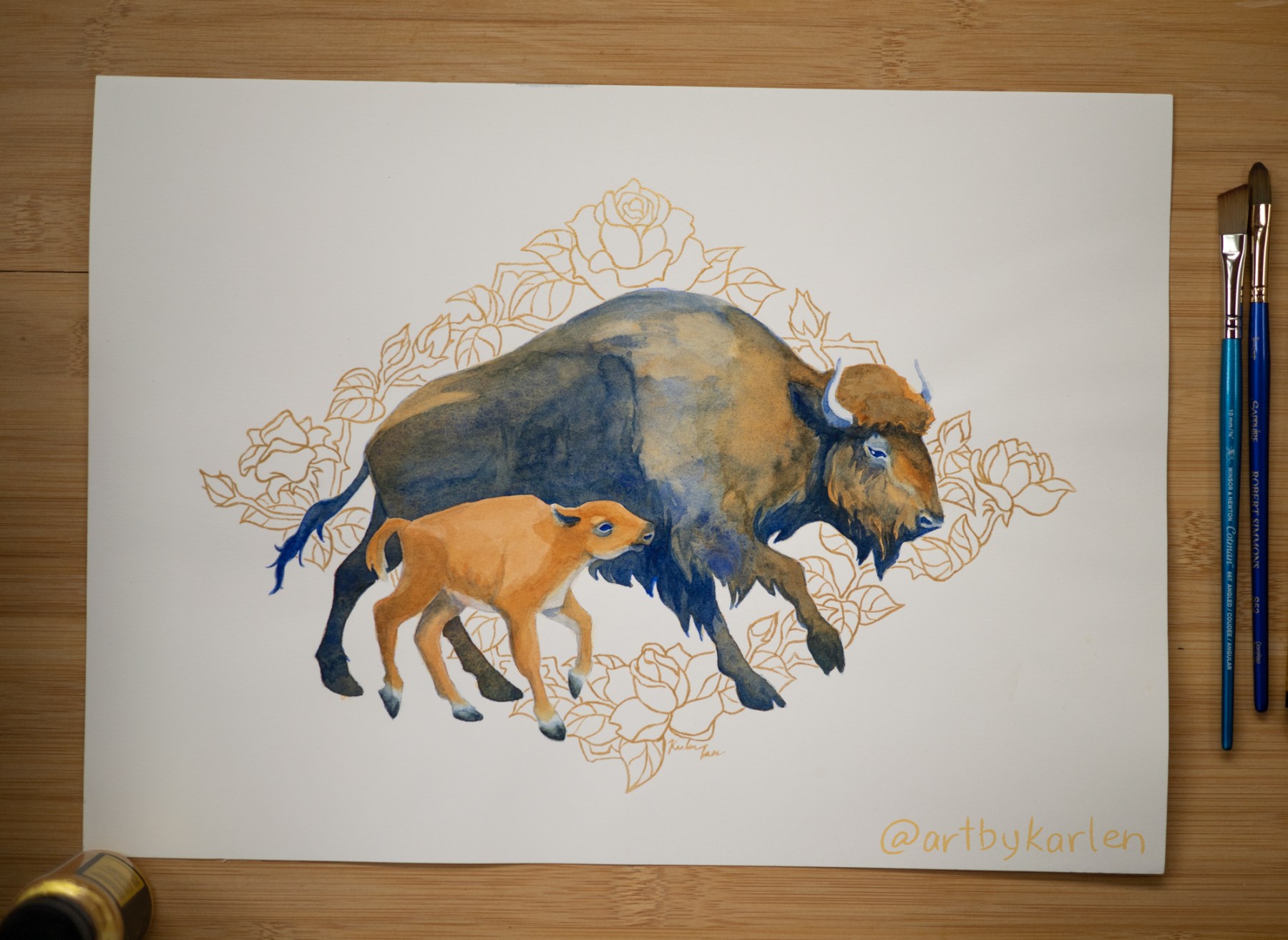
I was horrified at the ways some of the colors settled onto the paper but in the end it all came together. To prevent the colors from losing vibrancy from too much mixing, I used only two paints: Ultramarine and Burnt Sienna. As I was painting the buffalo I realized I needed the watercolor to act more like ink – so that the color would stay still if I went over it with more layers. The unintentional splotches made interesting textures though.
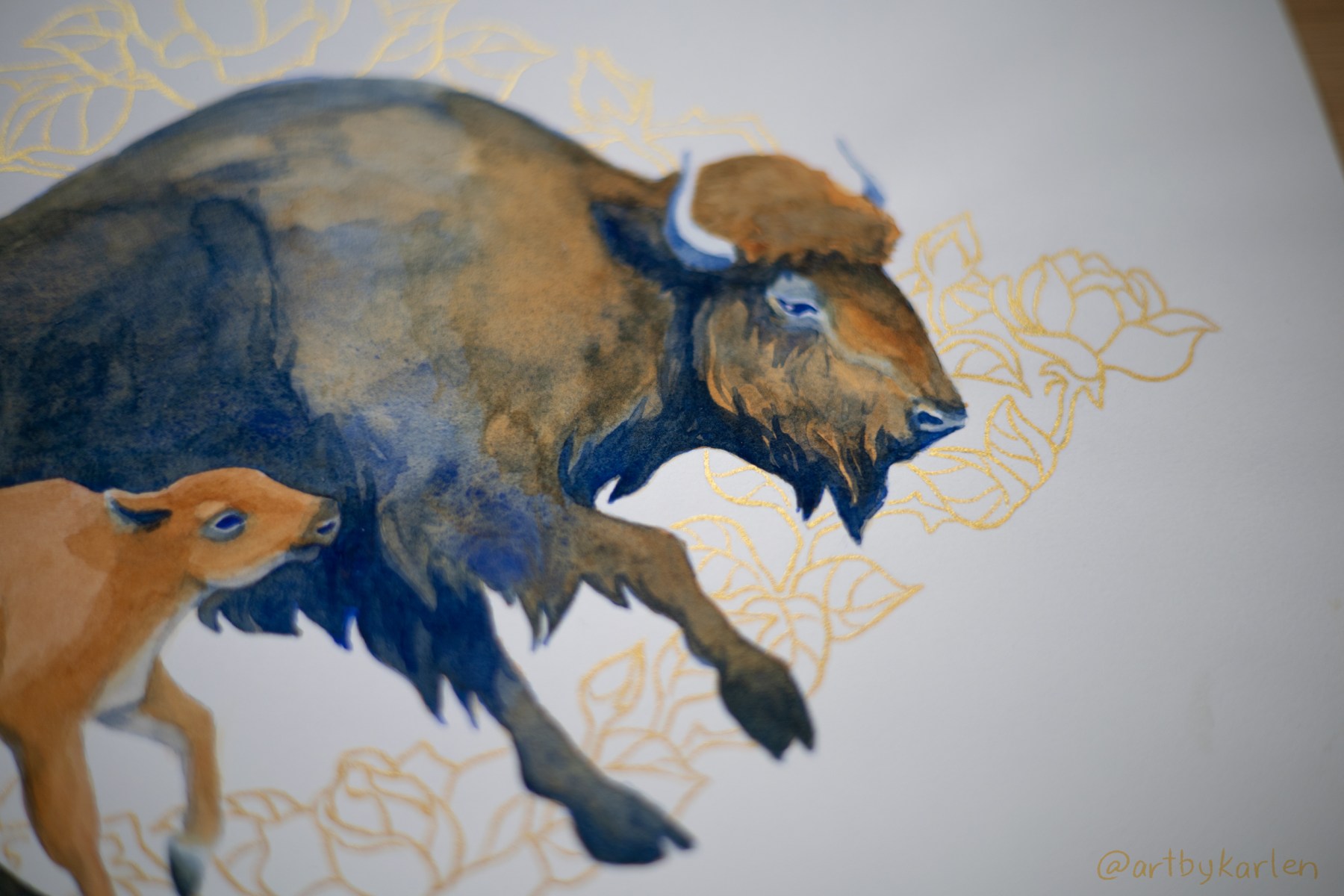
Lately I have been fascinated by floral cloisonné artwork – which is made by bending and soldering thin strips of metal that act at walls as color is added by filling each cell with either glass or enamel. I incorporated closed shapes in the design as actual cloisonné would require, but instead of filling the pattern with color I wanted the linework to shine by itself. I used a tiny paintbrush and needed to keep thinning out the acrylic gold paint with bit of water to get a smooth even flow. I went over each leaf and petal several times to get good coverage – similar to how we need multiple coats of nail polish to get the color to look solid.
The calf is the star of this image, but she looks lovingly towards the mother, to whom every child at one point in her life, is the most beautiful being in the world.
It’s Mother’s Day on Sunday – remember to call your mom this weekend and tell her she is beautiful. Happy Mother’s Day!
Thanks to my mom who went with me to the first art supply store I’ve ever been in and bought for me the set of professional watercolor brushes over 20 years ago that I still use today and for this very painting.
Discover more from Art by Karlen
Subscribe to get the latest posts sent to your email.

