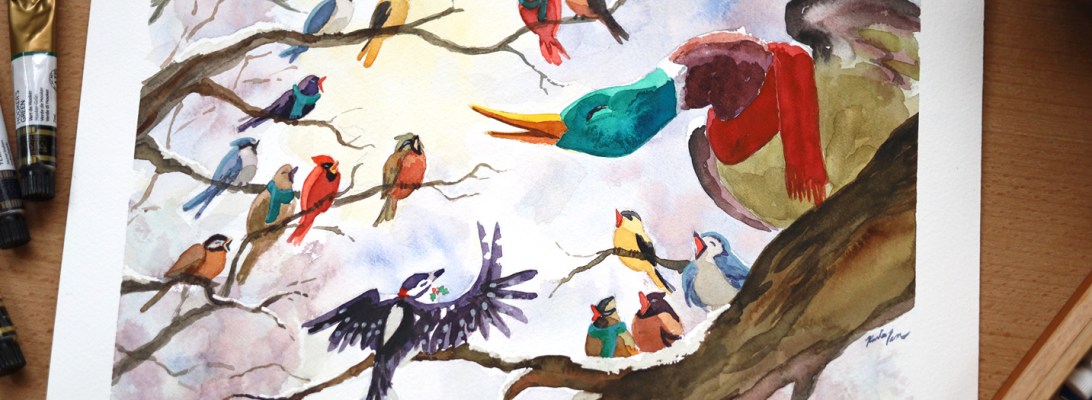
I got my Christmas artwork done early for the first time ever ~ hurray! In the many years I’ve been making holiday cards, it seems to get harder each time to come up with a new idea without being kitsch or trite. As I write and reflect on my process, I realize new experiences and new memories are made throughout the year, which get added to the well of ideas to draw from; coming up with something didn’t end up being that hard after all. The bottom line for me is always this: tell a story.
Recently while browsing the book section at a store, this book called out to me: The Complete Language of Birds by Randi Minetor. It’s an illustrated compendium containing hundreds of bird species with facts and folklore associated with each – 100% my jam. It was also the last copy there so of course I brought it home.
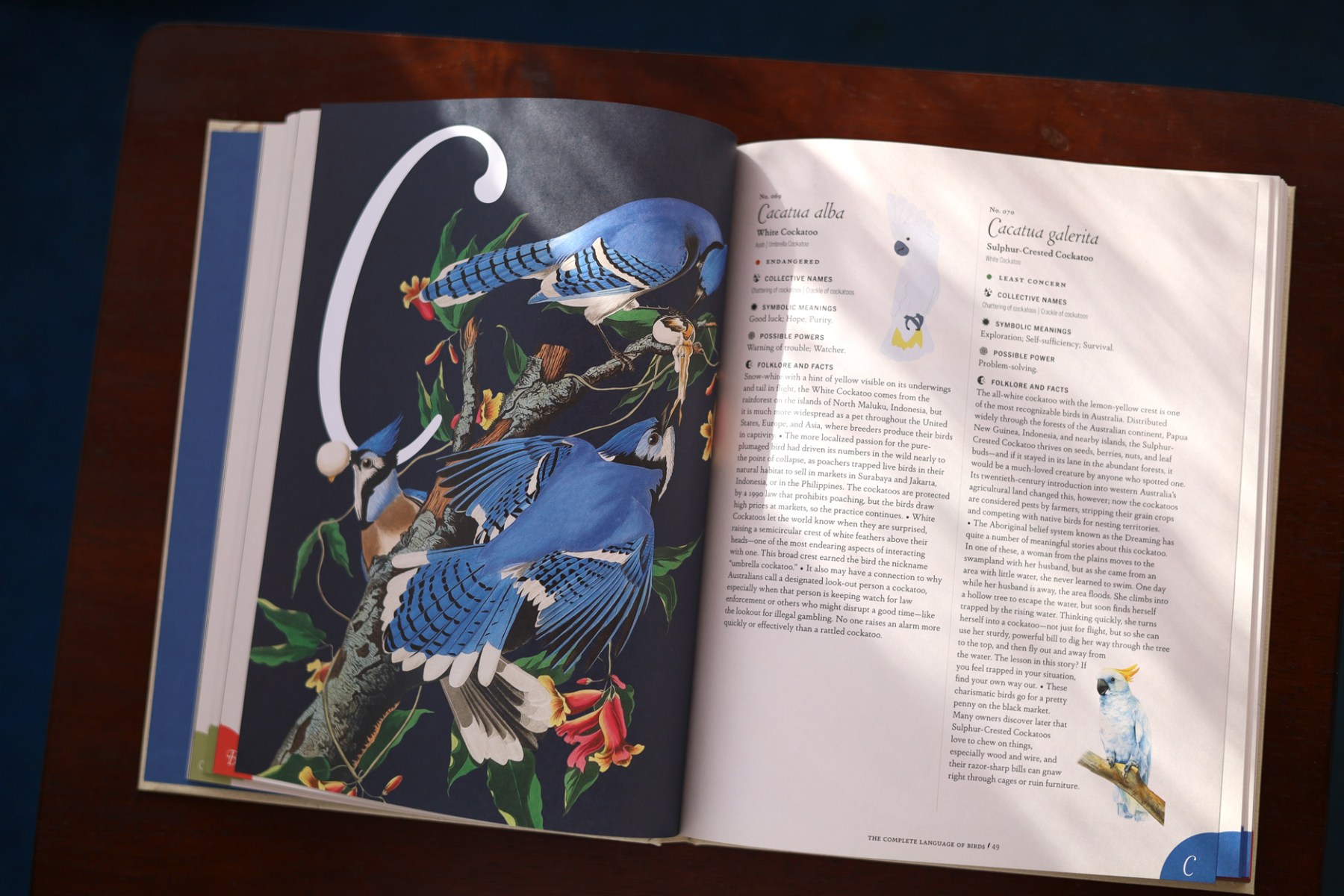
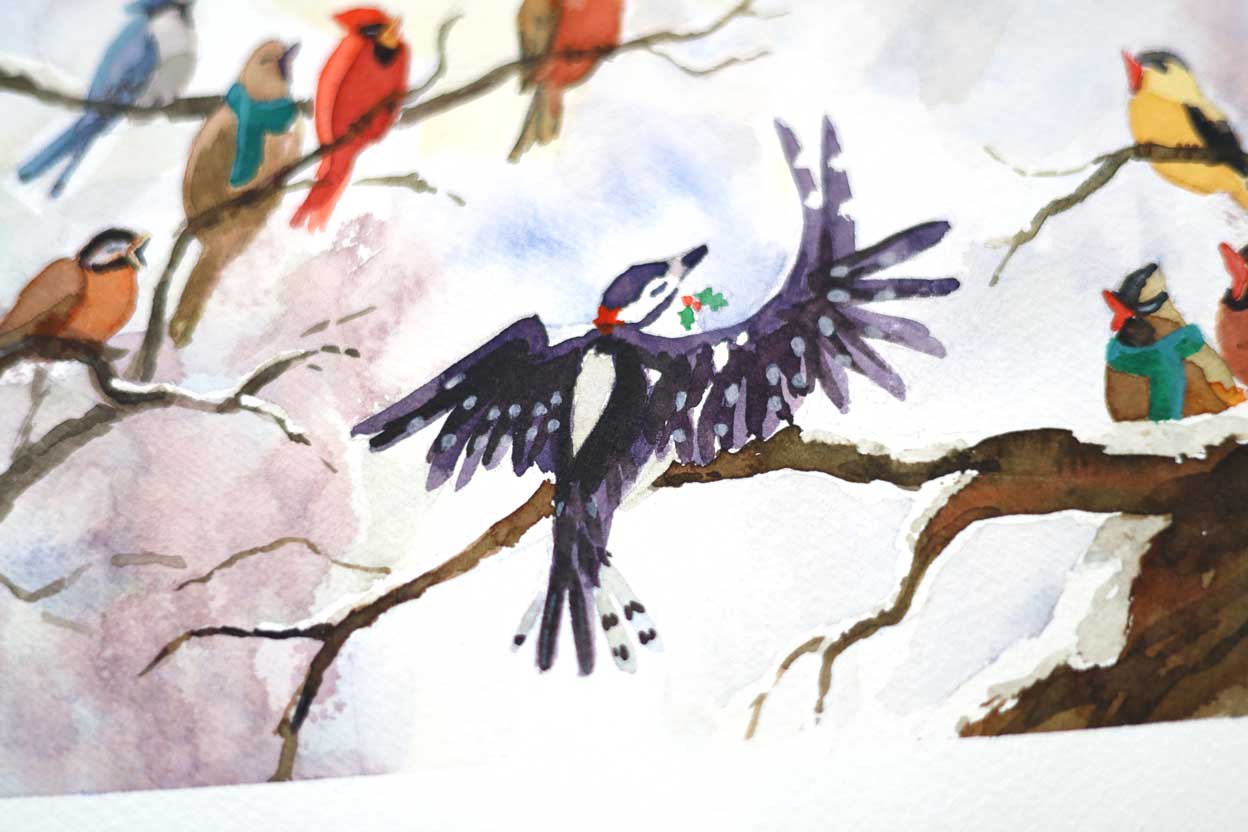
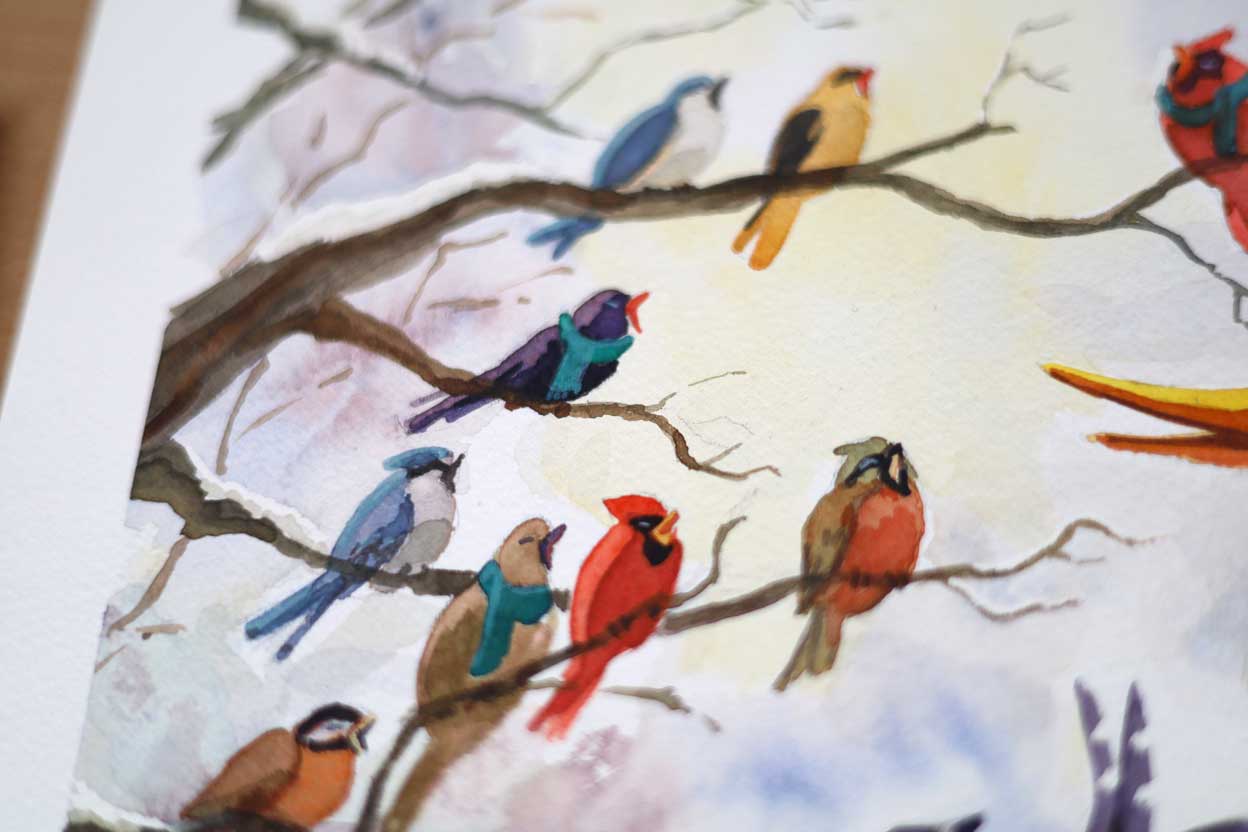
I leave this book around the house and would read about a random bird whenever the fancy strikes. As I was brainstorming ideas for the Christmas card, I thought of recent conversations with friends about our respective individualities, and hatched this idea: a choir made up of birds – and amongst them, a duck. I specifically chose wintering birds as I thought how each of these plucky birds with their unique traits and behaviors are able to thrive in the cold harsh weather. Ducks actually lay in the snow to keep warm! With a downy woodpecker to keep time, wouldn’t all of their different voices make the most wonderful choir?
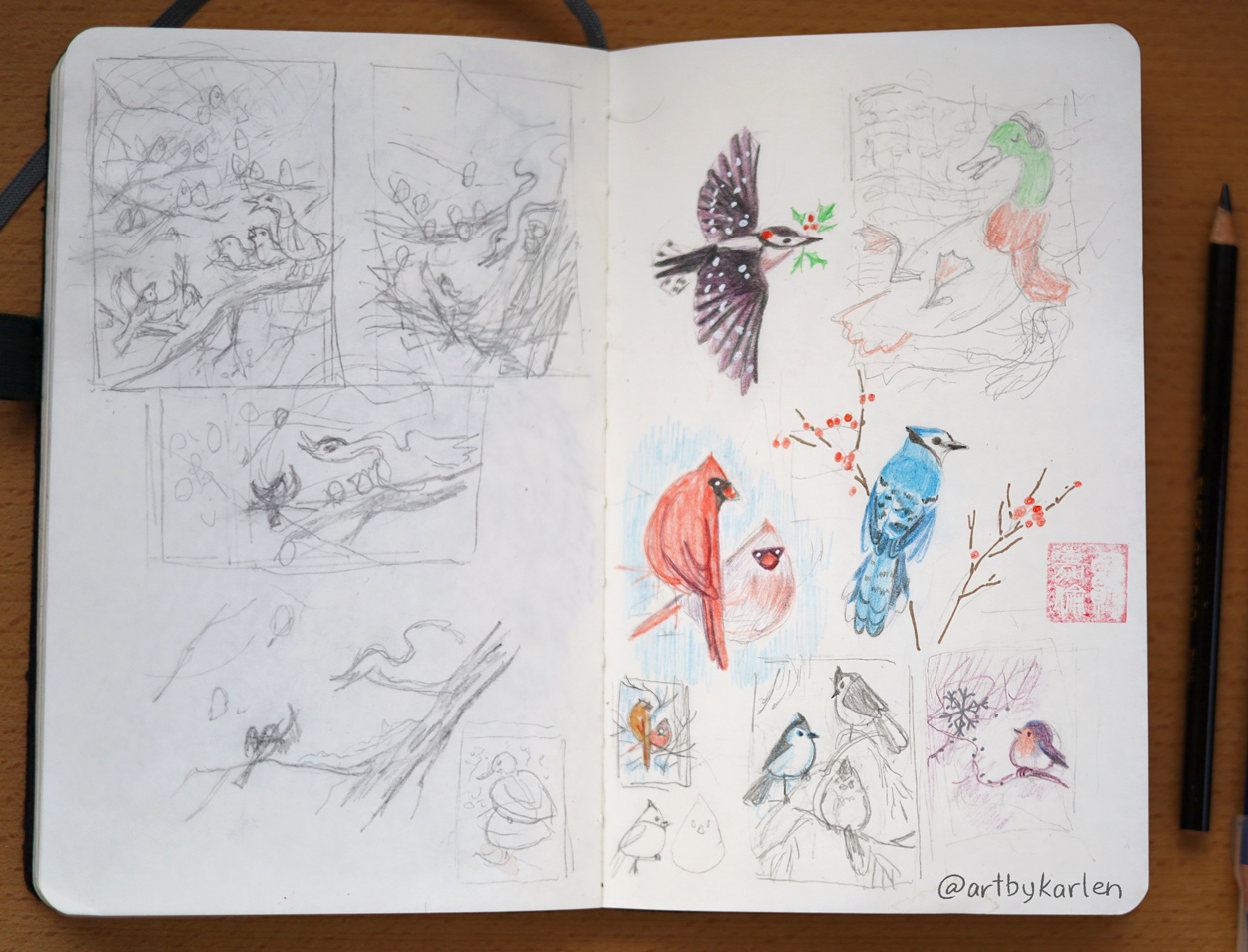
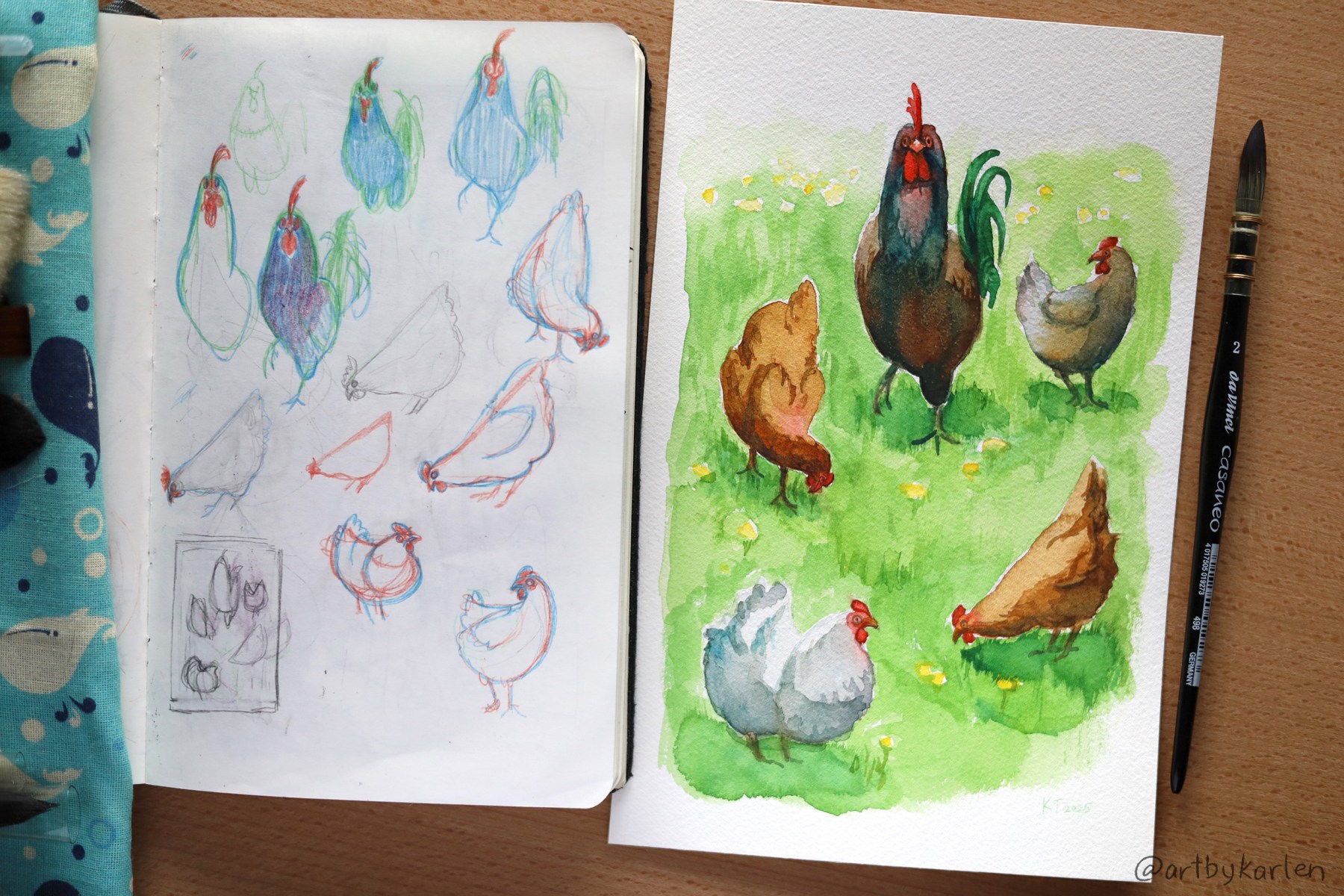
This spread from my sketchbook shows my chicken scratches of the concept as well as a series of smaller illustrations that followed.
Of course with watercolor artwork it’s mandatory to do a test run to determine the colors needed and how to mix them. I also tried painting with a natural sponge for the first time. You can see those textures in the background on the bottom right pinkish blobs.

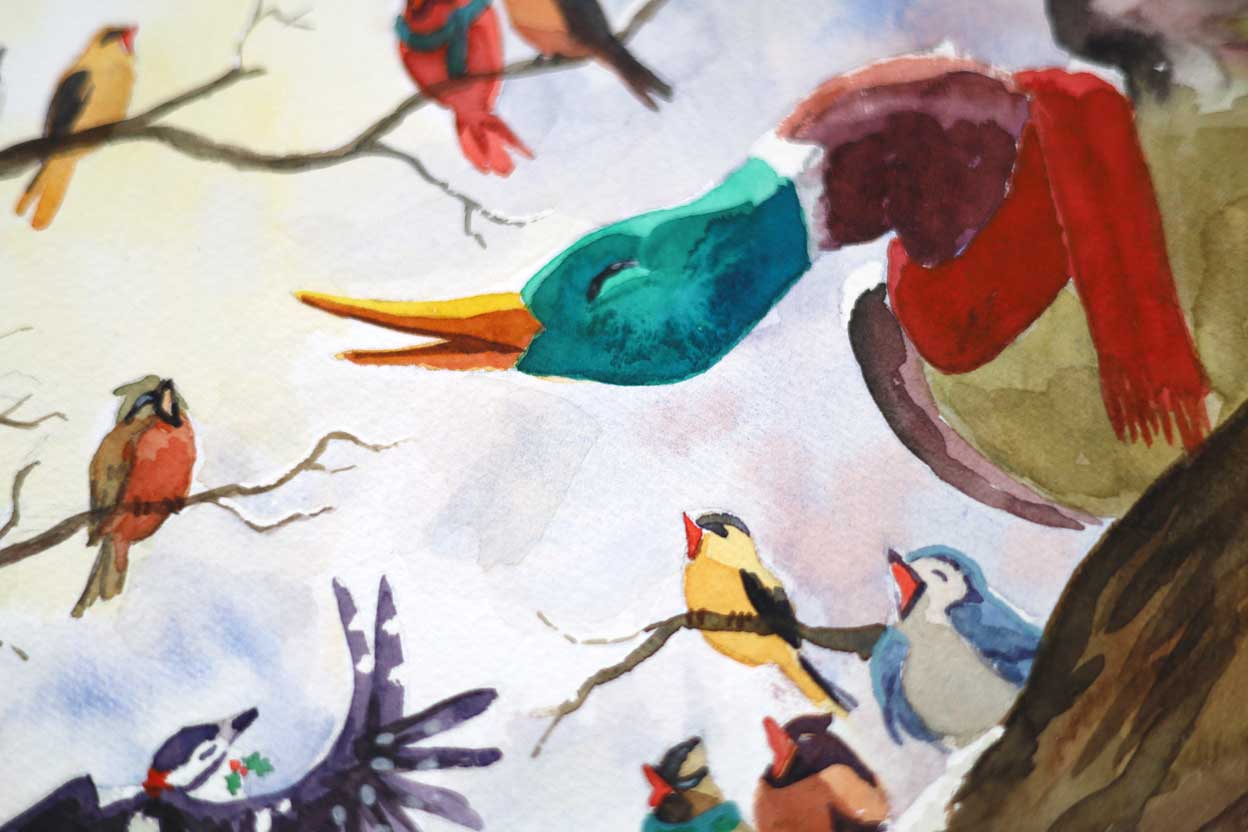
At first I had the idea that the birds next to the mallard would side-eye him in annoyance for being too ducky. But no – I decided he too, is as sonorous as the best of them. Hence that graceful swoop of the neck as he quacks out his lines.
Below is the final 9″ x 12″ illustration done on Fabriano Artistico Cold Press cotton paper. The sponge effects didn’t show up well since I am not as used to this paper, but that may have worked out for the best since too much texture in the background would have been distracting.
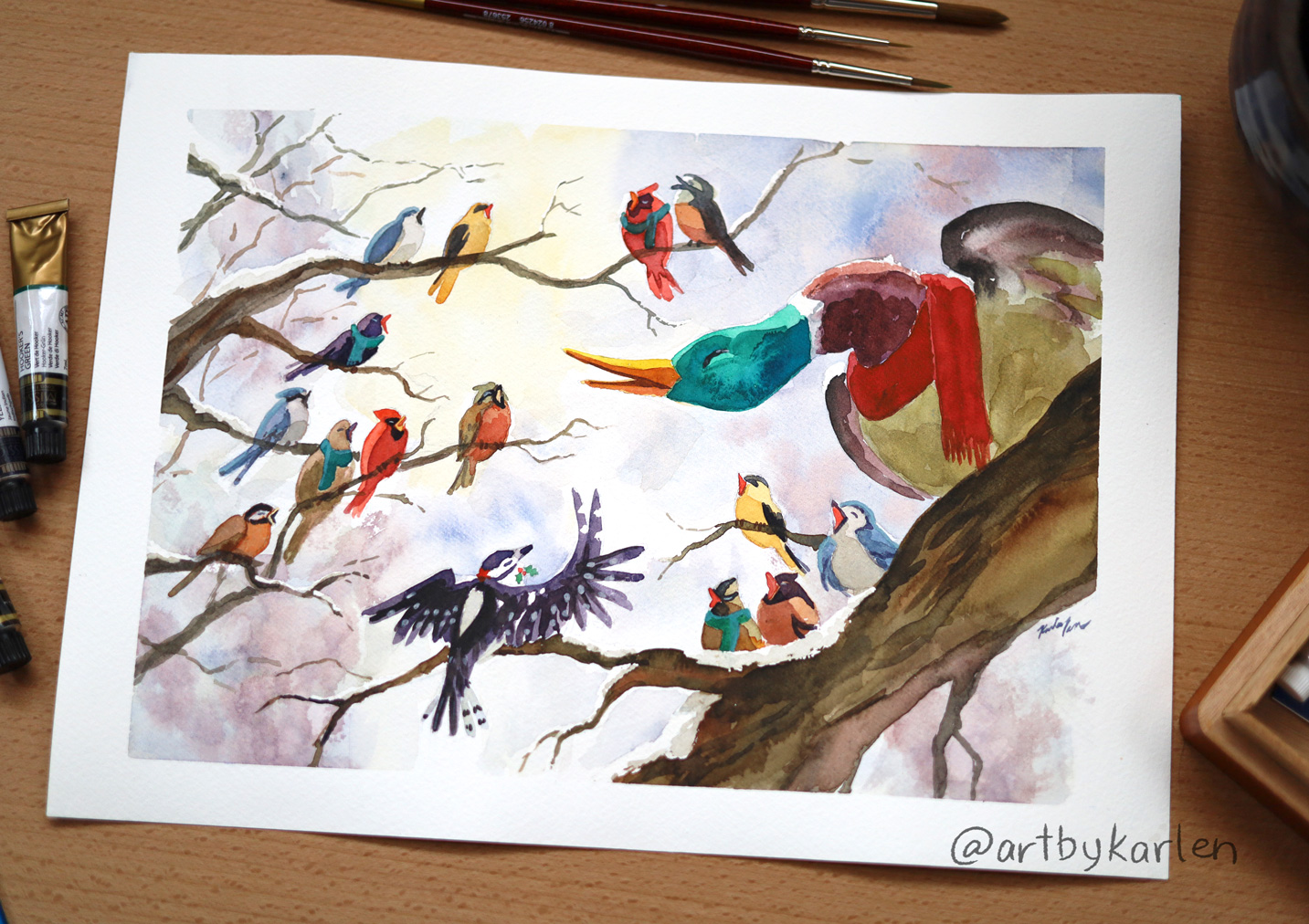
Gallery-quality giclée art prints of Choir of Birds are available through Inprnt.
Completing this piece gave me some momentum so I did a series of ACEOs, which stands for Art Cards, Editions and Originals. ACEOs stemmed off of Artist Trading Cards (ATCs), an idea developed by artist M.Vänçi Stirnemann in 1997. ATCs are meant be traded or given away so another artist Lisa Luree started the ACEO group on eBay to make cards available to collectors. The size of ATCs are based on sports trading cards and may be made with any media as long as they measure 2-1/2″ x 3-1/2″.
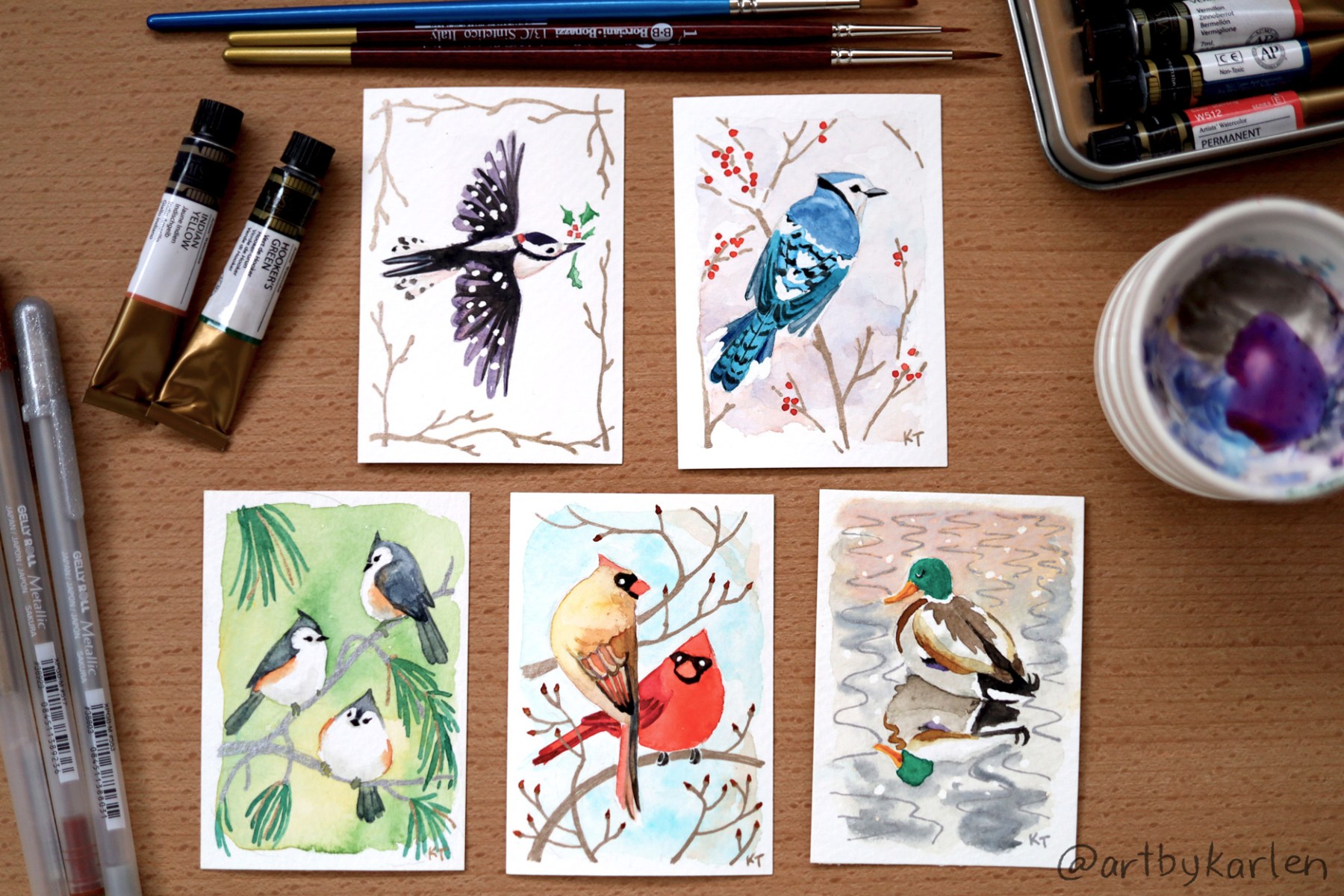
I made my first art cards as watercolor commissions at trade shows 15 years ago and decided to pick that up again when a co-worker mentioned that ATCs were making a resurgence. Then again, who really needs an excuse to make their own Pokémon cards? One of my commissions back then was actually a Snorlax!
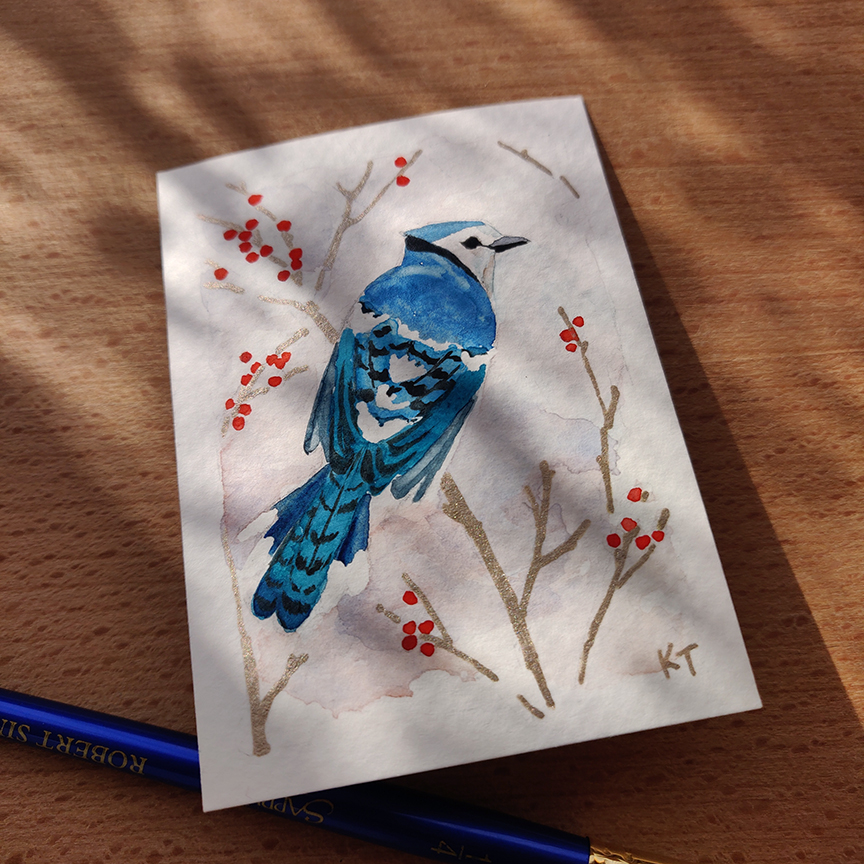
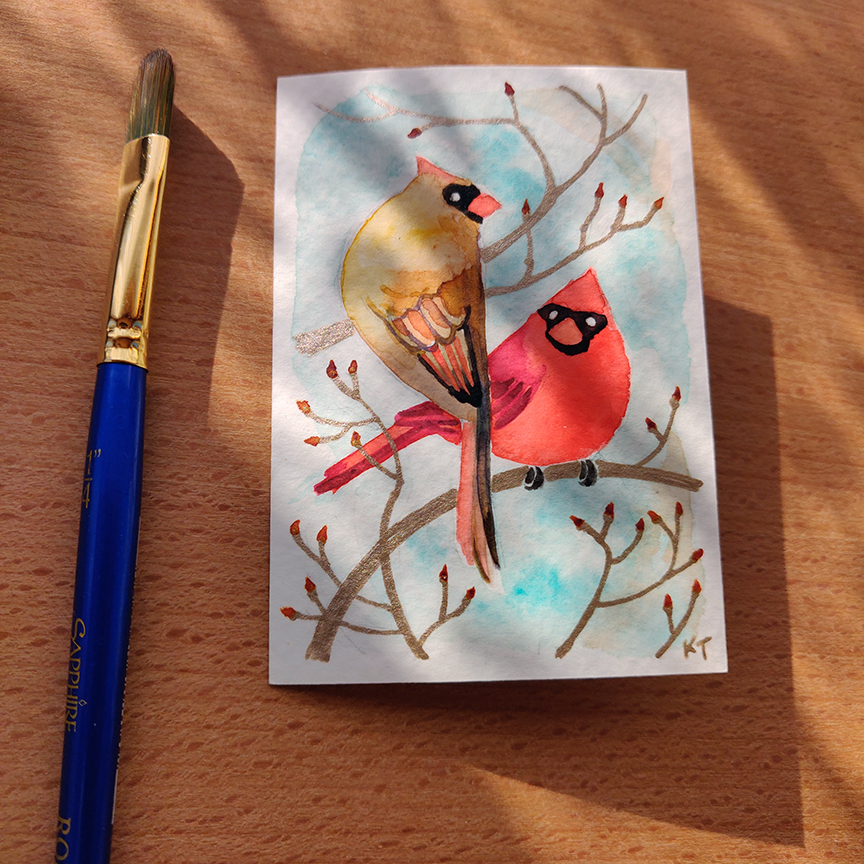
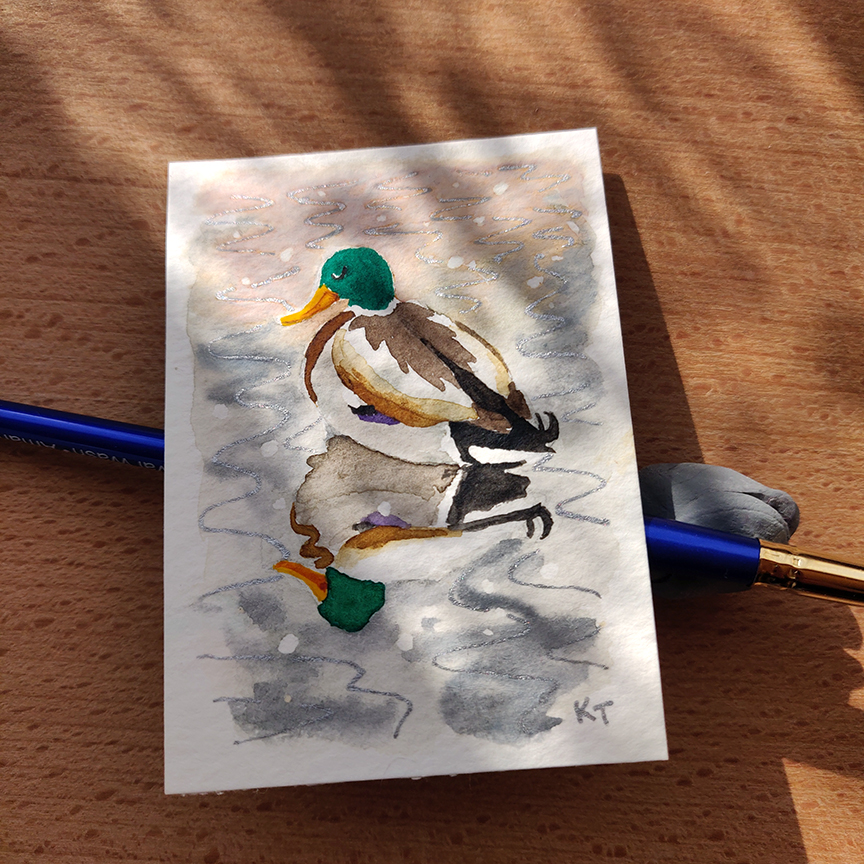
In the upcoming weeks I will be making a limited run of prints of my winter bird ACEOs, hand-embellished with the sparkly metallic ink as on the originals. As I think about the design on back side of the cards, it might be fun to share the folklore associated with these five birds that I learned from my book.
The finished pieces of artwork here are all available for purchase and I have set up a shop page for them. This is the first time I’m making my original physical pieces for sale online, so my website lacks full functionality as a store; I do not have an “Add to Cart” button, so to purchase multiple pieces, please send me a message so I can make an invoice for you with combined shipping.
A thousand thanks for your support and for reading! As always feel free to reply – the “donotreply” @ the top is lying.
 Art by Karlen